
PDF Ebook Brock Biology of Microorganisms (14th Edition)
Getting this publication in this web site could not lead you to walk and most likely to book store. Seeking shelf by rack will actually spend your time mainly. But, it well not guarantees you to be effective finding Brock Biology Of Microorganisms (14th Edition) Thus, you could locate it in the soft documents of this publication. It will certainly give you the amazing system of guide recommendation. You could visit the link as well as most likely to the web page making deal with. And also now, your publication look data of this can be your chosen publication and also place to read this intriguing book.
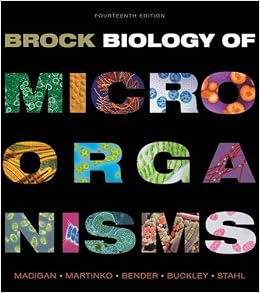
Brock Biology of Microorganisms (14th Edition)

PDF Ebook Brock Biology of Microorganisms (14th Edition)
Just for you today! Discover your preferred e-book here by downloading and getting the soft file of guide Brock Biology Of Microorganisms (14th Edition) This is not your time to generally likely to guide establishments to buy an e-book. Here, varieties of book Brock Biology Of Microorganisms (14th Edition) and also collections are readily available to download and install. One of them is this Brock Biology Of Microorganisms (14th Edition) as your recommended e-book. Obtaining this publication Brock Biology Of Microorganisms (14th Edition) by on the internet in this website can be realized now by going to the link web page to download and install. It will be easy. Why should be right here?
Many people reading a publication as they require it at the time, exactly they need some parts of page to offer the motivations. And even, simply couple of page from guide that constantly give reference for your jobs or jobs. This is why many visitors are the autodidact readers. Maybe, some of the visitors of Brock Biology Of Microorganisms (14th Edition) are likewise as well. Nonetheless, it does not mean that there is none that love analysis publication because it is their routine. There are additionally some of individuals who always do completing checking out guide as their need. As their practice as well as society, reading will assist them well.
The reasons that make you should review it is the related subject to the condition that you really want right now. When it's mosting likely to make better possibility of analysis materials, it can be the means you have to absorb the same ways. Yeah, the ways that you can enjoy the time by reading Brock Biology Of Microorganisms (14th Edition), the moment that you could use to do good activity, and also the time for you to acquire exactly what this publication offers to you.
To get just what you truly want to make, reading this book can be accomplished whenever you have chance to check out. Yeah, reading is a should from everybody, not only when you are remaining in the university. Checking out will make you wiser and better in expertise and also lessons. Several experiences can be also gotten from reviewing only. So, be wise to obtain all those gain from Brock Biology Of Microorganisms (14th Edition) to read as well as end up.
About the Author
Michael T. Madigan received his B.S. in Biology and Education from Wisconsin State University–Stevens Point (1971) and his M.S. (1974) and Ph.D. (1976) in Bacteriology from the University of Wisconsin–Madison. His graduate research was on the hot spring bacterium Chloroflexus in the laboratory of Thomas Brock. Following a three-year postdoctoral at Indiana University, Mike moved to Southern Illinois University–Carbondale, where he taught introductory microbiology and bacterial diversity as a professor of microbiology for 33 years. In 1988 Mike was selected as the Outstanding Teacher in the College of Science and in 1993, the Outstanding Researcher. In 2001 he received the SIUC Outstanding Scholar Award. In 2003 he received the Carski Award for Distinguished Undergraduate Teaching from the American Society for Microbiology, and he is an elected Fellow of the American Academy of Microbiology. Mike’s research is focused on bacteria that inhabit extreme environments, and for the past 15 years he has studied Antarctic microbiology. In addition to research papers, he has edited a major treatise on phototrophic bacteria and served for 10 years as chief editor of the journal Archives of Microbiology. He currently serves on the editorial board of the journals Environmental Microbiology and Antonie van Leeuwenhoek. Mike’s nonscientific interests include forestry, reading, and caring for his dogs and horses. He lives on a quiet lake with his wife, Nancy, four shelter dogs (Gaino, Pepto, Peanut, and Merry), and three horses (Eddie, Gwen, and Festus). John M. Martinko received his B.S. in Biology from The Cleveland State University. He then worked at Case Western Reserve University, conducting research on the serology and epidemiology of Streptococcus pyogenes. His doctoral work at the State University of New York at Buffalo investigated antibody specificity and antibody idiotypes. As a postdoctoral fellow, he worked at Albert Einstein College of Medicine in New York on the structure of major histocompatibility complex proteins. Since 1981, he has been in the Department of Microbiology at Southern Illinois University Carbondale where he was Associate Professor and Chair, and Director of the Molecular Biology, Microbiology, and Biochemistry Graduate Program. His research interests centered on the structure- function relationships of immune system proteins, including immunoglobulins, T cell receptors, and major histocompatibility proteins. His teaching interests include an advanced course in immunology as well as immunology and inflammation instruction to medical students. For his educational efforts, he won the 2007 Southern Illinois University Outstanding Teaching Award. He has been active in a number of educational outreach programs for pre-university students and teachers. He has also been a faculty member at Bard College in their innovative Citizen Science program, an interactive laboratory, computer and problem-based-learning science curriculum that introduces freshmen students to critical thinking through the discovery and application of scientific principles. He was the Chair of the Institutional Animal Care and Use Committee at SIUC and continues to act as a consultant in the area of animal care. He is also an avid golfer and cyclist. John lives in Carbondale with his wife Judy, a high school science teacher. Kelly S. Bender received her B.S. in Biology from Southeast Missouri State University (1999) and her Ph.D. (2003) in Molecular Biology, Microbiology, and Biochemistry from Southern Illinois University–Carbondale. Her dissertation work focused on the genetics of perchlorate-reducing bacteria. During her post-doctoral fellowship, Kelly worked on the genetic regulation of sulfate-reducing bacteria in the laboratory of Judy Wall at the University of Missouri–Columbia. She also completed a transatlantic biotechnology fellowship at Uppsala University in Sweden researching regulatory small RNAs in bacteria. In 2006, Kelly returned to her alma mater, Southern Illinois University–Carbondale, as an Assistant Professor in the Department of Microbiology and was tenured and promoted to Associate Professor in 2012. Her lab studies a range of topics including the regulation of stress responses by small RNAs, microbial community dynamics of sites impacted by acid mine drainage, and the bioremediation of uranium by metal- and sulfate-reducing bacteria. Kelly teaches courses in microbial genetics and molecular biology, has served on numerous federal grant review panels, and is an active member of the American Society for Microbiology. Her other interests include biking, cooking, and spending time with family, friends, and her miniature schnauzer, Pepper. Daniel H. Buckley is an Associate Professor at Cornell University in the Department of Crop and Soil Sciences. He earned his B.S. in Microbiology (1994) at the University of Rochester and his Ph.D. in Microbiology (2000) at Michigan State University. His graduate research focused on the ecology of soil microbial communities and was conducted in the laboratory of Thomas M. Schmidt in affiliation with the Center for Microbial Ecology. Dan's postdoctoral research examined linkages between microbial diversity and biogeochemistry in marine microbial mats and stromatolites and was conducted in the laboratory of Pieter T. Visscher at the University of Connecticut. Dan joined the Cornell faculty in 2003. His research program investigates the ecology and evolution of microbial communities in soils with a focus on the causes and consequences of microbial diversity. He has taught both introductory and advanced courses in microbiology, microbial diversity, and microbial genomics. He received a National Science Foundation Faculty Early Career Development (CAREER) award in 2005 for excellence in integrating research and education. He has served as Director of the Graduate Field of Soil and Crop Sciences at Cornell and Co-Director of the Marine Biological Laboratory Microbial Diversity Summer course in Woods Hole, Massachusetts. He currently serves on the editorial boards of Applied and Environmental Microbiology and Environmental Microbiology. Dan lives in Ithaca, New York with his wife Merry and sons Finn and Colin. Dan enjoys running and a variety of outdoor sports but, most of all, catching critters down at the creek with his boys. David A. Stahl received his B.S. degree in Microbiology from the University of Washington, Seattle, and completed graduate studies in microbial phylogeny and evolution with Carl Woese in the Department of Microbiology at the University of Illinois, Champaign-Urbana. Subsequent work as a postdoctoral fellow and research associate with Norman Pace, then at the National Jewish Hospital in Colorado, involved early applications of 16S rRNA-based sequence analysis to the study of natural microbial communities. In 1984 Dave joined the faculty at the University of Illinois with appointments in Veterinary Medicine, Microbiology, and Civil Engineering. In 1994 he moved to the Department of Civil Engineering at Northwestern University, and in 2000 returned to the University of Washington as professor in the Departments of Civil and Environmental Engineering and Microbiology. Dave is known for his work in microbial evolution, ecology, and systematics, and received the 1999 Bergey Award and the 2006 ASM Procter & Gamble Award in Applied and Environmental Microbiology. He is a fellow in the American Academy of Microbiology and a member of the National Academy of Engineering. His main research interests surround the biogeochemistry of nitrogen and sulfur and the microbial communities that sustain the associated nutrient cycles. His laboratory was first to culture ammonia-oxidizing Archaea, a group believed to be the key mediators of this process in the nitrogen cycle. Dave has taught several courses in environmental microbiology, was one of the co-founding editors of the journal Environmental Microbiology, and has served on many advisory committees. Outside the lab, Dave enjoys hiking, bicycling, spending time with family, reading a good science fiction book, and¯with his wife Lin¯renovating an old farmhouse on Bainbridge Island.
Read more
Product details
Hardcover: 1032 pages
Publisher: Pearson; 14 edition (January 12, 2014)
Language: English
ISBN-10: 0321897390
ISBN-13: 978-0321897398
Product Dimensions:
9.9 x 1.5 x 10.8 inches
Shipping Weight: 5.8 pounds (View shipping rates and policies)
Average Customer Review:
4.4 out of 5 stars
52 customer reviews
Amazon Best Sellers Rank:
#214,871 in Books (See Top 100 in Books)
The first thing I like about the text is that it has a lot of chapters devoted to microbes before getting to the medical microbiology parts. I have one other microbiology text and it basically pays lip service to microbes across a few chapters and then spends the rest of the book talking about what diseases various microbes produce. There is nothing wrong with that if you are interested primarily in the medical aspects of microbiology, but what if you are interested in microbiology for the sake of microbiology itself? You get shortchanged. But this text has chapter after chapter covering microbes, in detail, before getting into the chapters devoted to medical implications.The second thing I like about the text is that I keep finding interesting tidbits of information: things you don't usually get from reading molecular cell biology texts and other biology texts. Things such as, the largest individuals of the bacterial species Thiomargarita namibiensis have a diameter of about 750 micrometers, making it about 5 times the size of a typical paramecium; Archaea do not have fatty acids in the membrane lipids; some Archaea have a monolayer instead of a phospholipid bilayer; many Archaeal lipids contain rings in the hydrocarbon chains; some prokaryotes have membrane-bounded (but monolayer) inclusions such as magnetosomes, PHAs, and sulfur granules; heterocystous cyanobacteria have a differentiated cell called a heterocyst where nitrogenase is protected from oxygen; some plasmids are linear; even though E. coli can double in population size in 20 minutes it take 40 minutes to replicate the chromosome; and so on.
Good amount of information / detail to understand. Also loved that this came in a hardcover since the book is quite hefty. Figures and pictures included in the book make understanding the material MUCH better. Would highly recommend. I am currently using this book for an Environmental Microbiology course and contains most of the information we need to know -- may need a better structure though.
A bit dull, but it was very informative and had a lot of helpful facts for my class
it is what they say it is. the chapters are long, there's a ton of information, it was in perfect condition. If your professor uses this text, you're in for a ride!!
Perfect, only difference from original textbook is the page numbers because the pages numbers start at the preface and intro pages.
Twas the right book. Good quality.
nice book
I'm just amazed, this textbook is so easy to read, very interesting, and just outstanding. Highly recommend this if you are a microbio major or are interested in biology on a deeper level.
Brock Biology of Microorganisms (14th Edition) PDF
Brock Biology of Microorganisms (14th Edition) EPub
Brock Biology of Microorganisms (14th Edition) Doc
Brock Biology of Microorganisms (14th Edition) iBooks
Brock Biology of Microorganisms (14th Edition) rtf
Brock Biology of Microorganisms (14th Edition) Mobipocket
Brock Biology of Microorganisms (14th Edition) Kindle
Tidak ada komentar:
Write komentar