
PDF Download
After matching the downtime by reading , you could separate exactly what you will certainly get for the trips. That's not only the amusement, yet you will certainly also get the new expertise and also info upgraded. This publication is additionally recommended for it doesn't interrupt you with such difficult point to discover. It will certainly make you enjoyable with the lesson to obtain each time you have it. Basic as well as very easy to review as well as recognize make many people love this kind of publication.

PDF Download
We believe that you will certainly be interested to check out currently. This is a new coming publication from a very well-known writer in this globe. No challenging policy, no complicated words, and no complicated resources. This publication will be proper enough for you. This analysis material tends to be an everyday reading version. So, you could read it based on your needs. Reading to the end finished can offer you the large outcome. As what other people do, many who read a publication by finish can get the benefit completely.
This is just one of the ways when you have no fiend during that time; make the book as your true pal. Even this is not sort of talk-active point, you could make new mind and also get brand-new ideas from guide. From the literary book, you can gain the enjoyment as when you view the film. Well, talking about the books, really just what sort of publication that we will recommend? Have you found out about
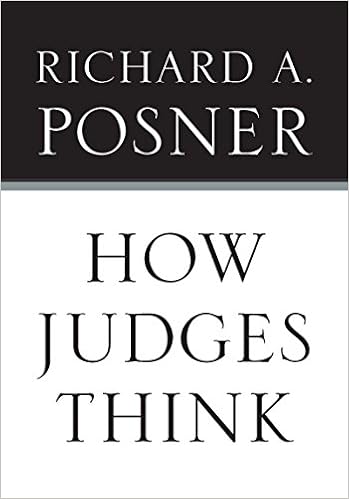
To verify exactly how this book will certainly influence you to be better, you can start checking out by now. You could additionally have actually recognized the writer of this publication. This is a very outstanding publication that was written by professional writer. So, you may not feel uncertainty of From the title and also the author added on the cover, you will certainly make certain to review it. Even this is a straightforward book, the content is really vital. It will certainly not should make you feel dizzy after reading.
And the reasons why you should choose this recommended publication is that it's created by a popular author worldwide. You could not have the ability to get this book quickly; this is why we offer you right here to alleviate. Being very easy to get guide to read actually ends up being the first step to end up. In some cases, you will certainly deal with problems in finding the outside. Yet here, you won't deal with that issue.
Product details
File Size: 1627 KB
Print Length: 398 pages
Publisher: Harvard University Press; Reprint edition (May 1, 2010)
Publication Date: May 1, 2010
Sold by: Amazon Digital Services LLC
Language: English
ASIN: B00LTMDKMS
Text-to-Speech:
Enabled
P.when("jQuery", "a-popover", "ready").execute(function ($, popover) {
var $ttsPopover = $('#ttsPop');
popover.create($ttsPopover, {
"closeButton": "false",
"position": "triggerBottom",
"width": "256",
"popoverLabel": "Text-to-Speech Popover",
"closeButtonLabel": "Text-to-Speech Close Popover",
"content": '
});
});
X-Ray:
Not Enabled
P.when("jQuery", "a-popover", "ready").execute(function ($, popover) {
var $xrayPopover = $('#xrayPop_0BC2362842DD11E98AFB8C976BD3D56B');
popover.create($xrayPopover, {
"closeButton": "false",
"position": "triggerBottom",
"width": "256",
"popoverLabel": "X-Ray Popover ",
"closeButtonLabel": "X-Ray Close Popover",
"content": '
});
});
Word Wise: Enabled
Lending: Not Enabled
Screen Reader:
Supported
P.when("jQuery", "a-popover", "ready").execute(function ($, popover) {
var $screenReaderPopover = $('#screenReaderPopover');
popover.create($screenReaderPopover, {
"position": "triggerBottom",
"width": "500",
"content": '
"popoverLabel": "The text of this e-book can be read by popular screen readers. Descriptive text for images (known as “ALT textâ€) can be read using the Kindle for PC app if the publisher has included it. If this e-book contains other types of non-text content (for example, some charts and math equations), that content will not currently be read by screen readers.",
"closeButtonLabel": "Screen Reader Close Popover"
});
});
Enhanced Typesetting:
Enabled
P.when("jQuery", "a-popover", "ready").execute(function ($, popover) {
var $typesettingPopover = $('#typesettingPopover');
popover.create($typesettingPopover, {
"position": "triggerBottom",
"width": "256",
"content": '
"popoverLabel": "Enhanced Typesetting Popover",
"closeButtonLabel": "Enhanced Typesetting Close Popover"
});
});
Amazon Best Sellers Rank:
#211,208 Paid in Kindle Store (See Top 100 Paid in Kindle Store)
Posner is pretty much the Go-To Guy in legal studies today. You may disagree with his conclusions but he won’t bore you (he’s a forceful writer), you won’t find it hard to follow him (he writes clearly), and you won’t wonder whether he has a hidden agenda (he is open and forthright in stating his sources, as well as any reservations he has about his own conclusions drawn from them). He’s academic (well documented and well reasoned) but not overly academic: his observations are always rooted in experience, for he is both an eminent teacher of jurisprudence at the University of Chicago and an acting federal circuit court judge, with years of practice on the bench. His books are not easy reads –he explores complicated issues and doesn’t simplify them—but you’ll never get lost in them, because he is an exceptionally articulate explainer. Years ago, when I was a history professor at a small women’s college in the east, I taught a course on historical method, and it was writers (thinkers) (scholars) like Posner I wanted to introduce to my students, not that he writes like historians do but that he writes forcefully, sparingly, lucidly and compellingly, and persuasion is just as important a part of any scholar’s business as explication.This is the third book by Posner that I have read. All three books were good. Two –including this one—are superb, models of engaged scholarship. (If you haven’t read anything by him before, I recommend you start with Reflections on Judging, 2013.) Posner is It.Arguing against legalism and various forms of moralism, Posner argues for a restrained pragmatic approach to the law, in line with his models on the bench, especially Holmes (“The life of the law has not been logic; it has been experienceâ€), who accepted that the written law only went so far and that beyond that point, the prudent judge crossed from enforcing pre-existing, stringent rules to making new law. Law in action is imprecise but not amorphous. “In our system the law as it is enforced in courts is created by judges, using legal propositions as raw materials.†He does not argue that a judge can make any law he wants. Rather, he argues that in any but the most constrained case, the judge must choose among courses of action that are not automatically (because the law tells the judge exactly what to do) clean --or should I say clear? From this simple premise –that judges are de facto legislators—Posner moves to a critique of many, maybe most academic commentators on the law, and a scathing critique of what is taught in even the best law schools in our country. He has, is in other books, harsh words to say about Justice Scalia’s supposed originalism, which he finds inadequate and self-deceiving –even Scalia admitted that he moved beyond it at times.If I were a lawyer, I would read this book NOW.
In this erudite and highly readable book, a distinguished judge and scholar provides the reader with remarkable insights into how judges think, or ought to think, when interpreting and creating the law. Judge Posner rejects sterile legalist theories in favor of a pragmatic approach to judicial decision-making, heavily influenced by economic theory. Drawing on insights from psychology, American legal history, and economics, Judge Posner argues persuasively that judges are not rule-bound adjudicating machines mechanically applying the law; rather judges creatively engage the real world by balancing competing interests, weighing consequences, and applying cost/benefit analyses when interpreting the law. In the process, judges, at least in the unique American judicial system, inevitably act as legislators and, yes, as human beings, they are influenced by life experiences, political beliefs, and psychological make-up. The result is a highly sophisticated and nuanced discussion of how judges think, or at least how they should think. This book is written in a lively style, with humor, wit, and a great deal of wisdom, including some very practical advice regarding how attorneys should frame their arguments when they appear in court. (Hint: instead of focusing on words; focus on the real world consequences of your arguments).
If you have been inside the world Judge Posner writes about, you will know how extraordinarily practical this book is. This is how judges think - not how they think they think. Legal decisions arise in real contexts and judges almost always react in part to that context. If they did not, then our law would be the same as it was in 1242. Posner illuminates the pragmatic truth clearly while providing ample theoretical background for the budding philosopher.At a time when the merely thoughtless insist that the "law be applied as written" (how, exactly, does one apply the phrase "equal protection" as written and divorced from context?)this refreshing burst of candor and common sense presented by the greatest legal mind of the past 50 years is critically important reading.
PDF
EPub
Doc
iBooks
rtf
Mobipocket
Kindle
Tidak ada komentar:
Write komentar