
Ebook Fat City (New York Review Books Classics), by Leonard Gardner
Checking out a publication could aid you to enhance your idea, minds, lesson, experiences, and fun. Also you have actually read numerous type of book; it will certainly offer both exact same as well as different effects. For this book, you can locate a new method pertaining to exactly what you actually require now. By spending just couple of times a day to read Fat City (New York Review Books Classics), By Leonard Gardner, you future will be better with the lesson to get currently. Prepare as well as always remind about it!
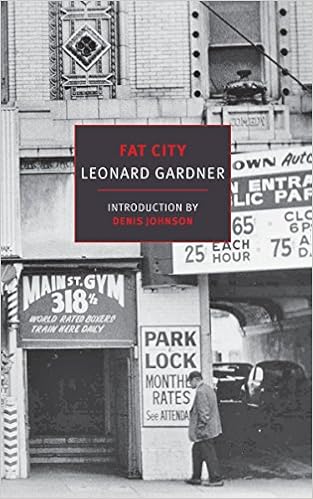
Fat City (New York Review Books Classics), by Leonard Gardner

Ebook Fat City (New York Review Books Classics), by Leonard Gardner
Just what's the category of book that will make you fall in love? Is just one of guide that we will supply you right here the one? Is this truly Fat City (New York Review Books Classics), By Leonard Gardner It's so happy to understand that you love this type of publication style. Also you have no idea yet guide is really discussed, you will know from th
Reading Fat City (New York Review Books Classics), By Leonard Gardner is a very valuable passion and doing that could be gone through whenever. It implies that reading a publication will certainly not limit your activity, will not compel the moment to spend over, and also will not invest much cash. It is an extremely budget-friendly as well as reachable point to buy Fat City (New York Review Books Classics), By Leonard Gardner Yet, with that said really low-cost point, you can get something brand-new, Fat City (New York Review Books Classics), By Leonard Gardner something that you never do and enter your life.
Why should be reading Fat City (New York Review Books Classics), By Leonard Gardner Once more, it will certainly depend upon how you really feel and consider it. It is certainly that one of the perk to take when reading this Fat City (New York Review Books Classics), By Leonard Gardner; you can take much more lessons straight. Even you have not undergone it in your life; you can gain the experience by reviewing Fat City (New York Review Books Classics), By Leonard Gardner As well as currently, we will certainly present you with the online book Fat City (New York Review Books Classics), By Leonard Gardner in this web site.
You can alter your mind to be better after obtaining the sources from some files. However when you have the resources from this book, you could take how different this publication view from others. Yeah, this is just what makes you feel completed to get rid of the feature of the resources. Fat City (New York Review Books Classics), By Leonard Gardner turns into one suggestion that supplies the presence of brand-new details as well as concepts. Now, your time is for getting the book sooner. This is it the book that you require now!
Review
"Sometimes, somehow, someone gets it right. The reissue of Fat City, Leonard Gardner’s pitch-perfect account of boxing, blue-collar bewilderment and the battle of the sexes, is cause for celebration, and reflection.” —Paul Wilner, San Francisco Chronicle "A slim, taut book that has earned its status as a classic by dint of its immaculate, evocative prose, a compassionate but dour view of the human condition, and the absolute credibility of its depiction of the sport of the busted beaks...Though Fat City was written long before cellphones or the Internet, its human apparatus is state of the art. With this new edition, new generations of readers and writers will discover it, learn from it, and find both wincing pain and deep pleasure. Gardner’s achievement lives on precisely because Fat City is not depressing. The tale is dark, but it is charged with energy. It is seductive, engaging, and lit, despite the odds, by a vitality that is in itself a form of hope. We come away from it burnt clean.” —Katherine Dunn, Slate“A meditation on rugged beauty and abject degradation.”—Sam McManis, The Sacramento Bee"Really a superior performance...Gardner takes us into the bitter fancies of two professional prizefighters...the first is a has-been, the second is learning to lose. A third character, their manager, links the pair in defeat and frustration...Gardner strips them of everything except the most important thing: their singularity...of such a seemingly small gift is dignity born and success measured." --Newsweek“Gardner…writes like a sad poet…free of clichés and sentimentality… a beautifully written book.”—Brian Greene, The Life Sentence"Fat City affected me more than any new fiction I have read in a long while, and I do not think it affected me only because I come from Fat City, or somewhere near it...He has got it exactly right...but he has done more than just get it down, he has made it a metaphor for the joyless in heart." --Joan Didion"Gardner has laid claim to a locale that others have explored, but seldom with such accuracy and control...in a tone that is both detached and lyrical. The triumph of the book is its action. Running, fighting, loving, weeding, harvesting, these men stay in motion in order not to be doomed. So powerfully does Gardner record their actions that we recall their lives, not their defeats." --The New York Times Book Review"Gardner's book should be taken slowly. The chapters are constructed with great care, worked, polished and fitted like a precision parts in a beautiful engine. There is a comic chapter on the physical attributes of boxers which could easily be overlooked, three pages as delicate and funny as the calmer Twain. Chapter Four, a short section ending a magnificent description of a boxer doing roadwork, withstands the closest scrutiny." --Frank Conroy, Life"The stories of Ernie Munger, a young fighter with frail but nevertheless burning hopes, and Billy Tully, an older pug with bad luck in and out of the ring, parallel one another through the book. Though the two men hardly meet, the tale blends the perspective on them until they seem to chart a single life of missteps and baffled love, Ernie its youth and Tully its future. I wanted to write a book like that." --Denis Johnson, Salon"By almost any criterion imaginable, Leonard Gardner's Fat City is one of the two or three very best boxing novels ever written. That it rates among the Top Ten is pretty much beyond dispute." --George Kimball, The Sweet Science"Leonard Gardner wrote Fat City as a moody elegy to the wayward dreamers who fight in tank-town arenas, then retreat to flophouses and shotgun weddings, day labor and rotgut drinking binges." --John Schulian, L.A. Times"In his pity and art Gardner moves beyond race, beyond guilt and punishment, as Twain and Melville did, into a tragic forgiveness. I have seldom read a novel as beautiful and individual as this one.”—Ross MacdonaldSet in the bars, buses, gyms, and transit hotels of gritty, fifties’ era Stockton, California, Fat City is a perfect document, mapped and studied, the dialogue memorized, by generations of writers. The well-known film (written by Gardner for John Huston), only approaches the spare timelessness of Gardner’s prose.—Jayne Anne Phillips
Read more
About the Author
Leonard Gardner was born in Stockton, California. His writing has appeared in The Paris Review, Esquire, Southwest Review, and other magazines. His screen adaptation of Fat City was made into a film by John Huston. A Guggenheim Fellow, he lives in northern California.Denis Johnson is the author of eight novels, one novella, one book of short stories, three collections of poetry, two collections of plays, and one book of reportage. His novel Tree of Smoke won the 2007 National Book Award.
Read more
Product details
Series: New York Review Books Classics
Paperback: 200 pages
Publisher: NYRB Classics; Reprint edition (September 8, 2015)
Language: English
ISBN-10: 1590178920
ISBN-13: 978-1590178928
Product Dimensions:
5.1 x 0.4 x 8 inches
Shipping Weight: 12.6 ounces (View shipping rates and policies)
Average Customer Review:
4.5 out of 5 stars
57 customer reviews
Amazon Best Sellers Rank:
#284,282 in Books (See Top 100 in Books)
I noticed I started receiving recommendations for sports novels after finishing this one. I don't think it's strictly appropriate to classify this one thus. I mean, the two main characters intermittently grasp the lowest rungs of the fight game, but the book is not about boxing as such. And what we do see of the sport lies impossibly distant from the lavish spectacles at the title level.One of the two men also appears to be clinging to the lower rungs of society, moving from hotel room to hotel room and battling his demons. The free indirect speech of Billy Tully takes us through his life of missed opportunities and failures. His flirtation with self-awareness corresponds with the transient life he is leading, and must be familiar to most, even if the desperation may not be. The thing here is that Gardner gives voice to the invisible and the voiceless, in that sense placing Fat City in the Steinbeck tradition of social criticism.The details are perhaps dated, appearing from the modern day closer to the Depression than to the ostensible post-war prosperity these characters are clearly missing. But the missing out can't be dated. Some people must be forever living that tenuous life of striving and never coming close, and this novel absolutely nails it.
"In the midst of a phantasmagoria of worn-out, mangled faces, scarred cheeks and necks, twisted, pocked, crushed and bloated noses, missing teeth, brown snags, empty gums, stubble beards, pitcher lips, flop ears, sores, scabs, dribbled tobacco juice, stooped shoulders, split brows, weary, desperate, stupefied eyes under the lights of Center Street, Tully saw a familiar young man with a broken nose." So goes life in Stockton, California in a spare and brilliantly written tale of woe. Gardner has created a genuinely disturbing tale which universalizes the down-and-out experience. It's strongly reminiscent John Williams ("Stoner") and of the "romans durs" of Georges Simenon (also reprinted by NY Books). These authors are transcendent experts in creating genuine psychological terror without the horror-story overtones and worn out memes. "Fat City" is fiction at its finest. This isn't a novel of redemption. It's the story of two sometime amateur boxers, Bill Tully and Ernie Munger with a taste for booze and losers. Both have that certain "appetite for destruction" and that tendency is made a whole lot worse for both of them thanks to occasional lucid insights into the desperate, imbecile trajectory of their lives. Despite occasionally grasping the fact that - at best - they are headed nowhere (and, at worst, to an early and ugly demise), they can't and won't change. In part due to this and amplified by remarkable descriptions of the wretched city of Stockton, a dreary and oppressive sense of melancholy pervades the book. Returning after yet another of many wasted nights of drinking, Tully remarks on the wallpaper in his flophouse: "At midnight he negotiated the stairs to his room, its walls covered with floral paper faded to the hues of old wedding bouquets." He wonders, "And was this where he was going to grow old? Would it all end in a room like this?" Not only does he realize that this is the probable outcome, he seems to be determined to fulfill that destiny. Munger blunders into a losing marriage and a family he can't support.When George Orwell wrote, "He wears a mask and his face grows to fit it" he could have very well been describing how Tully and Munger recognize the full dimensions of their destinies, yet due whatever they can to ensure they achieve a perfect fit. These aren't heroes following fate, they are just losers. Tully is a barfly and he wants it that way. Munger is second-rater and takes every step to lock himself into that fate.. and they are equally and painfully aware of the implications of their decisions. This is crux point of the novel and it's devastatingly delivered. Next time you're passing by a modern Tully or Munger think about this book or Bob Dylan's lyric: "And nobody has to think too much/About Desolation Row
This is a book about boxers written in 1968, so there is obviously some problematic content here—namely that the men are the only ones allowed to have personalities while the women are all objects of lust or derision in equal measure. However, I assumed that going in, and took that failing with a grain of salt. Beyond that, the language of the book sang. There was a rolling cadence to the words, a blunt edge of simplicity which masked the writer’s fancy footwork. I most loved the solitary scenes—Munger running until his body gave out, Tully’s dogged quest for the end of a bottle, these snapshots of men on hopeless quests to out run themselves and their lives. Probably a writer’s book more than a causal reader’s book. I enjoyed it and will probably return to it often for dissection.
Fat City (New York Review Books Classics), by Leonard Gardner PDF
Fat City (New York Review Books Classics), by Leonard Gardner EPub
Fat City (New York Review Books Classics), by Leonard Gardner Doc
Fat City (New York Review Books Classics), by Leonard Gardner iBooks
Fat City (New York Review Books Classics), by Leonard Gardner rtf
Fat City (New York Review Books Classics), by Leonard Gardner Mobipocket
Fat City (New York Review Books Classics), by Leonard Gardner Kindle
Tidak ada komentar:
Write komentar